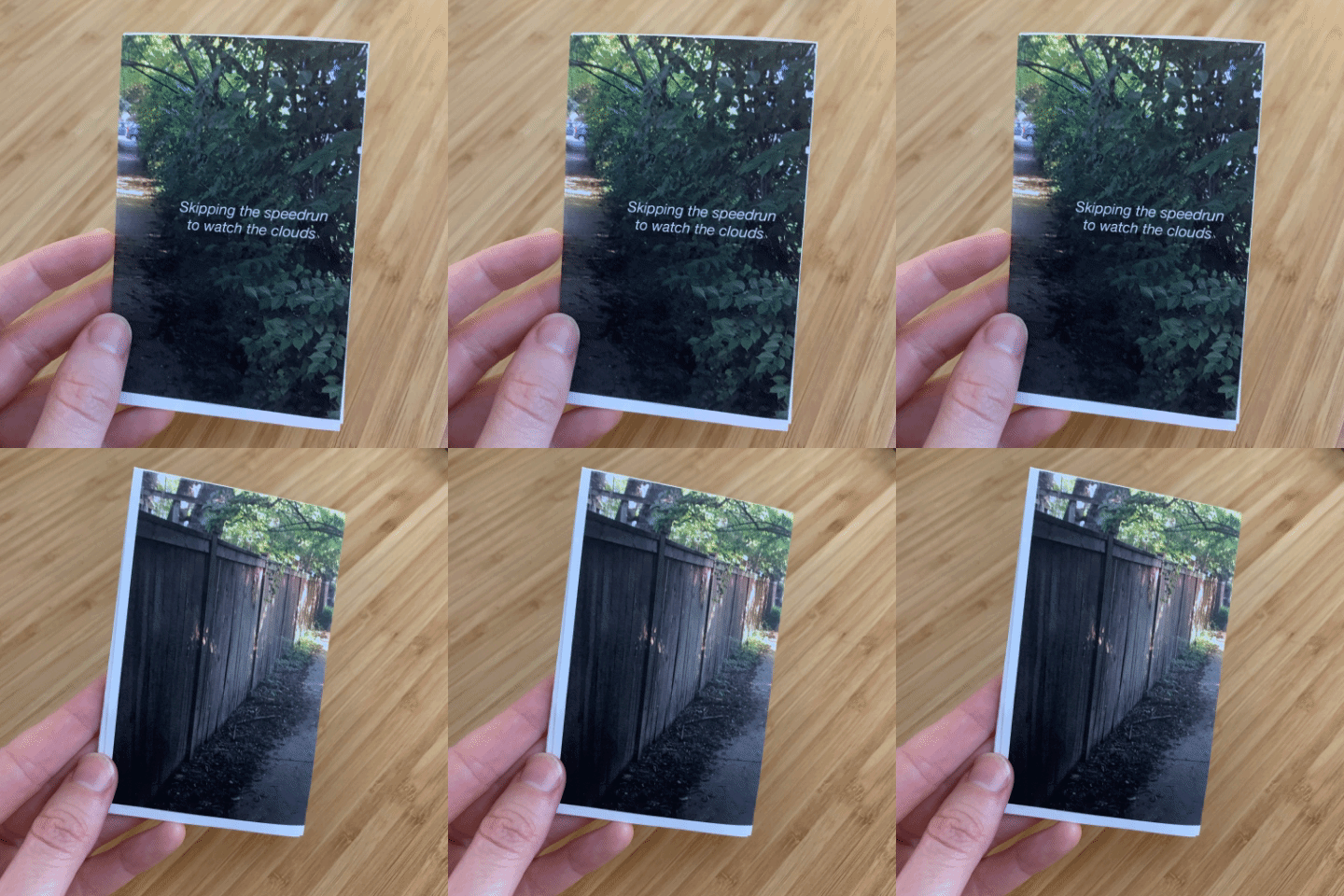
Skipping the speedrun to watch the clouds
I remember a few moments of everyday magic clearly. One in the morning, a small rainbow portal cast onto the wall in our childhood house. The morning sun shone through the prism of the front door eyehole marking the parallel wall. When aligned with your eye it looked like a rainbow tinted eyepatch. Facing forward and looking outward, your field of vision became flooded with a wash of color. Shifting left to right: indigo, cerulean, lime, marigold, an outline of tangerine crimson.
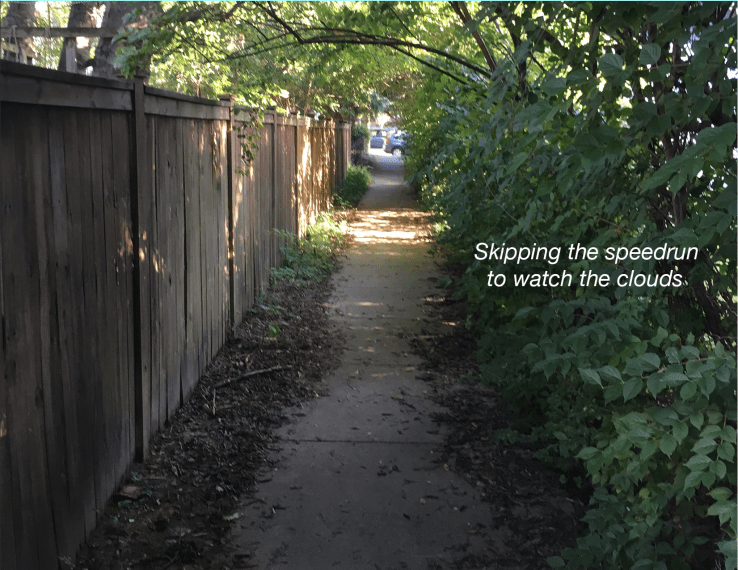
Another when learning to bike taking a secret sidewalk. A pathway connecting two blocks, two worlds – hidden between backyards. The summer sounds crescendo as the leafy green hedges leaned in to cloak the pathways existence.
I remember another moment much later. Navigating bike paths of Forest Park in Saint Louis with friends. The winding arteries led us all to a firefly breeding ground. With the flashing synapses of firefly networks lighting up families of trees, cascading and echoing throughout the heart of the park.
A question for makers of any age – What does it mean to root something in the slightly familiar, our own everyday slightly suspended? A heightened sensitivity to ambient elements reminding us how all things are delicately interconnected. What happens if I tap the particles of dust sprinkled through a window’s sunbeam? Combing through it like a hand out a car window, triggering notes of a chromatic scale. What does it mean to construct, make, illustrate moments of almost not quite magic realism?
In a post about slow games TB writes “Gamers, slow down. Resist rushing to the finish line. Immerse yourself in the beauty of the art and gaming experience.”* Although the blog post was implying the rapid turnover of games in the industry as well as the constant backlog of games people would like to play – Inspired by this I say also to myself and all makers slow down. Slow food, slow net, slow tech, all the slows but slow down how? I’d like to skip the speedruns and instead engage in watching clouds to get lost in their shapes, what they tell us about weather and culture past, present and future and what images and stories emerge. Maybe it leads to introspection maybe it calls for collaboration or both, But slowness how?
Maybe it’s a slowness through non-linear narratives, unfolding through an open world exploration. In digital worlds but also the physical. One of my first memories of living in New York City was tracking down the peephole cinema, and searching for where it lived along the Union Docs wall. Maybe rather it’s the slowness of a prolonged consideration when a game controller is not just a mouse or standard game console controller but instead my body in space catching words as they complete sentences along my arm outstretched. Or the slowness of realizing and practice of moving my mouth sidewise will in fact rotate my tetris piece clockwise. The slowness of trying to align the speed of my swing at the right rate with my neighbors’ swings to arpeggiate a chord.
It could be the physical slowness of crawling into an ephemeral physical space that houses the game itself. Please, crawl into this silver space blanket cave to play Pac Man in 360. Bridging between physical & digital worlds – a transition into the magic circle.
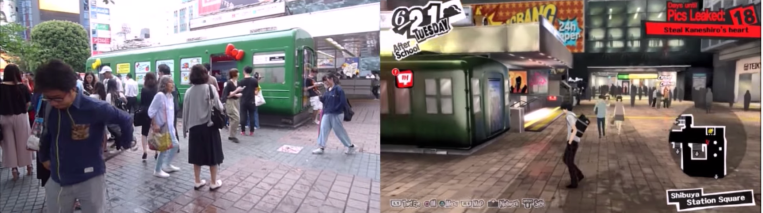
Maybe rather it’s the slowness that happens after. A slow revelation – When a player realizes that they can explore the real subway of Shibuya in Tokyo for the first time and have it feel like a home, due to their memories of Persona 5 gameplay with its map rooted in reality. What unexpected joy is yielded for cavers passing through the Mammoth Cave networks to realize they were navigating similar channels as their text commands in the Colossal Cave Adventure. Is there a subtle beauty to ground fiction in reality?
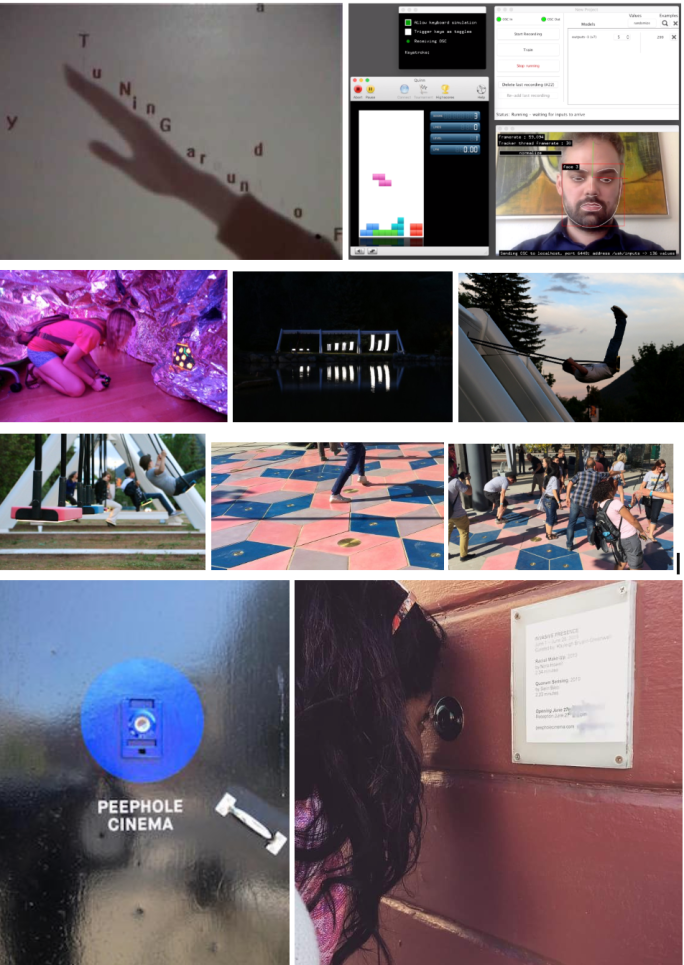
References / Inspirations
- Cover / back image: by Hunter Moore of secret sidewalk
- Page 2 images:
- Other Inspirations
- Blog post from internet search on slowness and games
- “Somewhere Nearby is Colossal Cave: Examining Will Crowther’s Original “Adventure” in Code and in Kentucky” by Dennis G. Jerz [Digital Humanities Dissertation ]
- Firefly by Lin Yang (ITP project)
- Magical Pencil by Yang Yang (ITP thesis)
- Anji Play method / Cas Holman’s approach to play
- Death by audio arcade
- Sleep no more (example of non linear explorative)
- Video Games / apps like
- Journey
- Firewatch
- Gone Home
- What Remains of Edith Finch
- Untitled Goose Game
- Stardew Valley
- Forest app
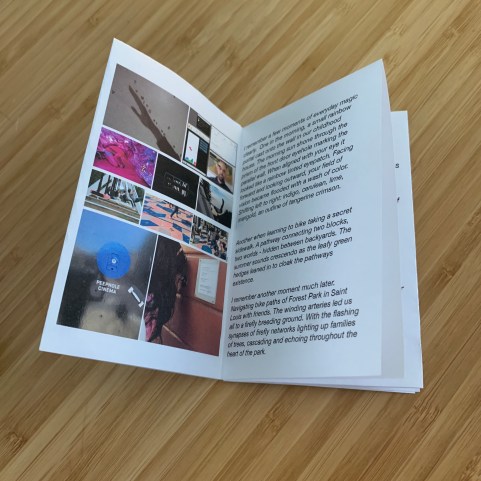
- how to make a mini zine











 30 KM/s