ICM HW#6: PDOM, CSS & HTML

Full Screen (in browser)

P5.js Editor view

Week 6 Assignment

Create a sketch that it uses HTML controls (like buttons, sliders, text input fields) as a means of modifying the sketch’s behavior in real time. (You can adapt a previous homework assignment for this if you’d like.) BONUS: Incorporate an HTML control from p5.dom that we didn’t talk about in class. Alternatively or in addition, use p5.dom to modify other elements on the page (these elements could be added by hand in index.html or dynamically added by your code.)

Continue reading “ICM HW#6: PDOM, CSS & HTML”

Midterm Project Idea


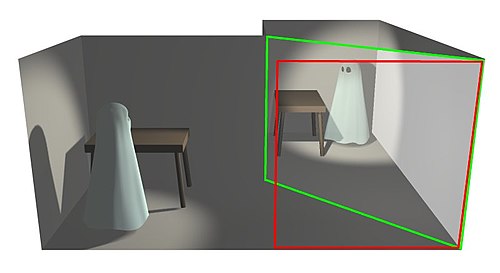
500px-Peppers_ghost_low_angle.jpg

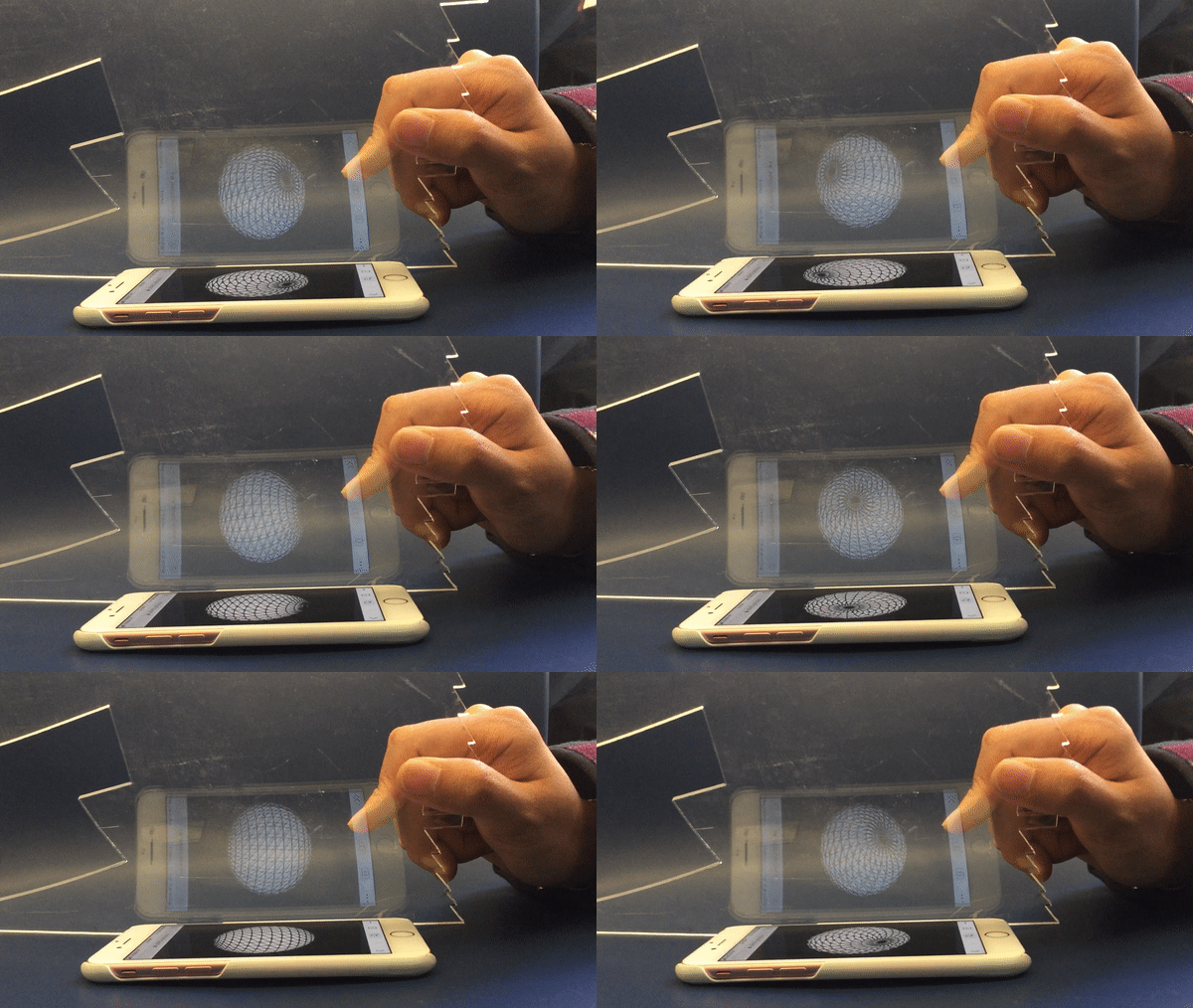
peppers-ghost.gif

Pepper’s Ghost

My Halloween Midterm partner is the wonderful Jiwon Shin!  ❤ ❤ ❤  Initially we were inspired by the optical effect of a Pepper’s Ghost hologram .  After some super fun brainstorming (and some pepper’s ghost youtube watching), we landed on the idea of  using an accelerometer to sense if we’ve “shaken” ( tilted ) a bottle or not to help a trapped soul escape.We were very inspired by Yoko Ono’s exhibit “We are all water”

Continue reading “Midterm Project Idea”

ICM: Week 5 – Objects and Arrays


Cloud City 


Assignment

Arrays and objects allow you to do something new with your programs: keep track of user action over the course of your sketch’s execution. For this week’s assignment, create a sketch that takes advantage of your new skills. The sketch should allow the user to use clicks, key presses, etc. to add new elements to the scene (and potentially to remove them later). Your sketch should use an array of objects. (Using a constructor function or the class syntax is optional.)

Originally I was inspired by Allison Parrish’s example in the notes on Objects & Arrays


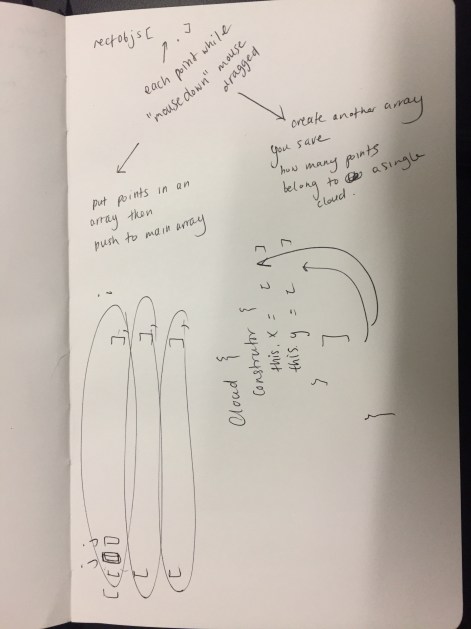
IMG_4216.jpg


  • Thinking about Arrays within Arrays (or really arrays as objects?)
    • Would like to comb back through code with an *objects & methods* approach:
    • When talking with classmate Jiwon Shin  we started talking about how i could add a deletion tool to my current sketch state (which pushed mouseDrag to an empty array when you drew with mouse down to create each cloud). She walked me through how I could push all of the point drawn with the mousePressed into an array that is then pushed into another array – essentially making cloud objects?


  • One issue I hit when deleting was the program would break if you hit the delete key too many times. When debugging it in the console, we noticed it would try to call a negative number from the array (which doesn’t exist), as a solution – limited the call number to positive numbers only. So no matter how many times you hit “c” the program will still only reference the array number 0, and add on as you draw more clouds.


  • it still breaks if you click without drawing something – it confuses the program, due to no information being pushed to one of the arrays?

Importance of mental pictures w/ Robert Krulwich of Radiolab


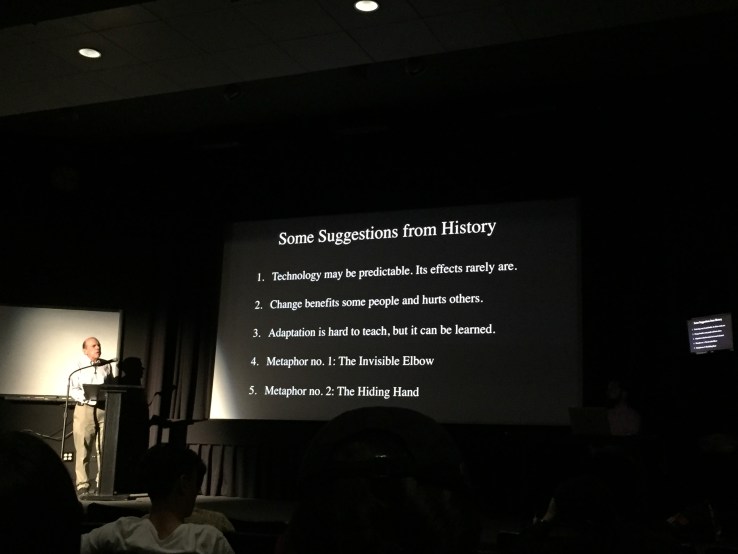
Yesterday in applications, our guest speaker was Robert Krulwich. His talk was incredibly inspiring, reiterating the importance of building a mental visual image or metaphor that helps us understand math and science. That there’s an importance to distilling graphs and diagrams to stories and metaphors. He also played us a clip from their Fountain of Youth episode – where they anthropomorphized two genes a scientist was talking to help the listener [casting them as characters with sound-design and voice over elements]

He also talked about the importance of being transparent in the journalism field, and that they try to incorporate and show when they get it wrong and have to re-draft as well. That that’s all part of journalism – that it’s effective and necessary to show that curiosity can be messy, exciting, and difficult, documenting its process ❤

Episode on Color 


More soon!

CommLab: Storyboard session


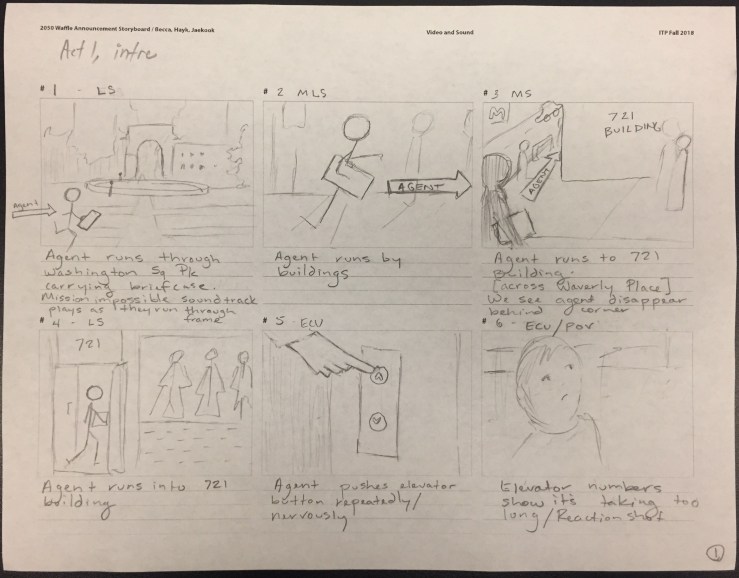
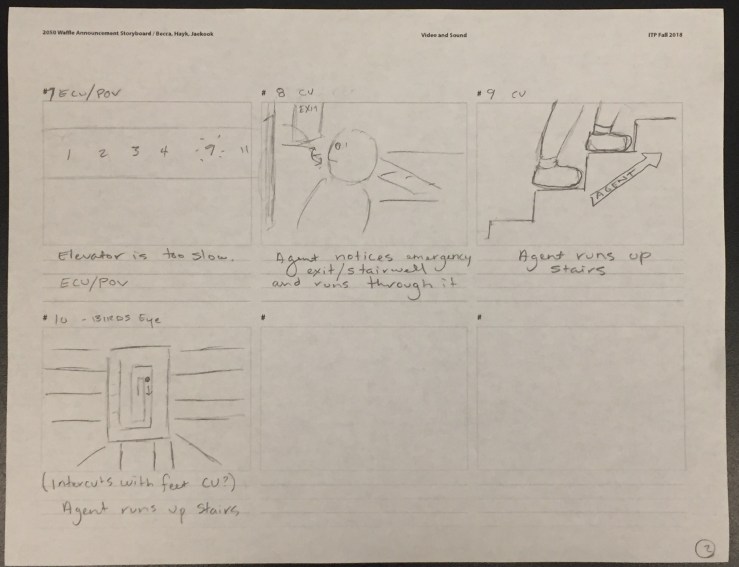
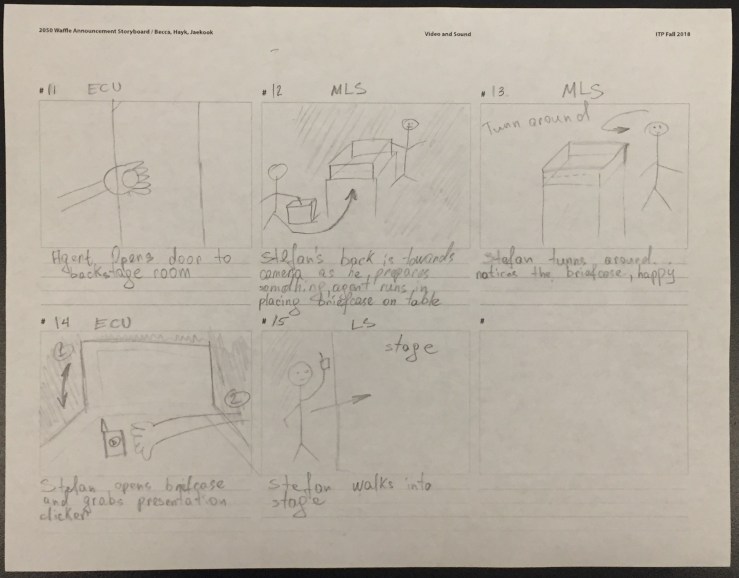
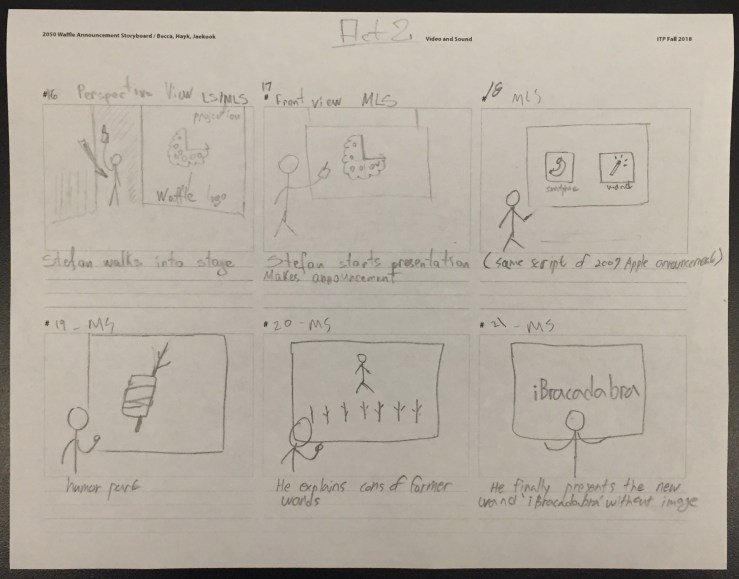
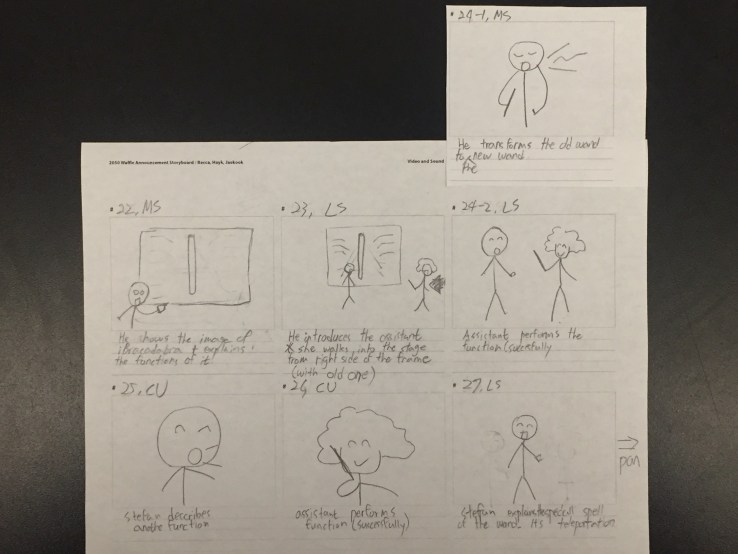
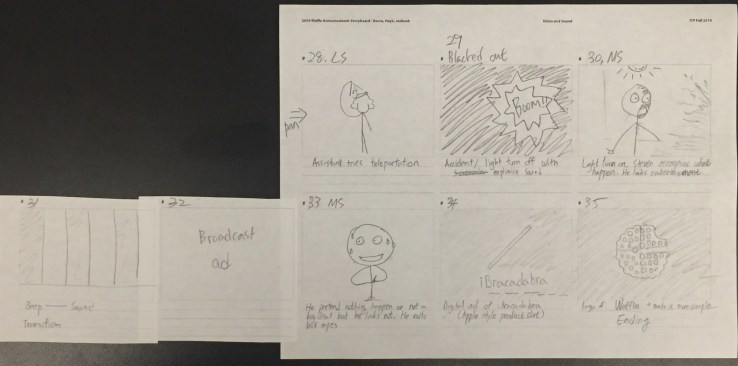
When brainstorming, we all really like the idea of a design fiction, while thinking about the concept of magic and technology. We were inspired by Apple Event videos (specifically the 2018 September Event and the Iphone announcement in 2007) + the Adult Swim style BroomShakalaka video when looking through references from class .  If we cut down the storyboard? We’ll remove the intro paraody, and flesh-out Act 2


Team: Jaekook Han, Hayek Mikayelyan, Becca Moore

Option A: A 2-4 minute (max) promotional video for an invented object or service. This could be an infomercial, a design fiction, or an instructable

Product Announcement: i.Bracadabra

Company: Waffle 

Synopsis: It’s the year 2050, where magic has become an everyday reality. Wooden wands have expanded people’s daily abilities to perform tasks like moving objects and flying. Stefan Bobbs from the company Waffle is announcing his new revolutionary wand.


iBracadabra story board draft

board pg 1pg 2IMG_6287

IMG_6288IMG_6289IMG_6290


Link to Sound walk reflection here 


Commlab: Liminal Spaces Soundwalk

Duration: 5:00
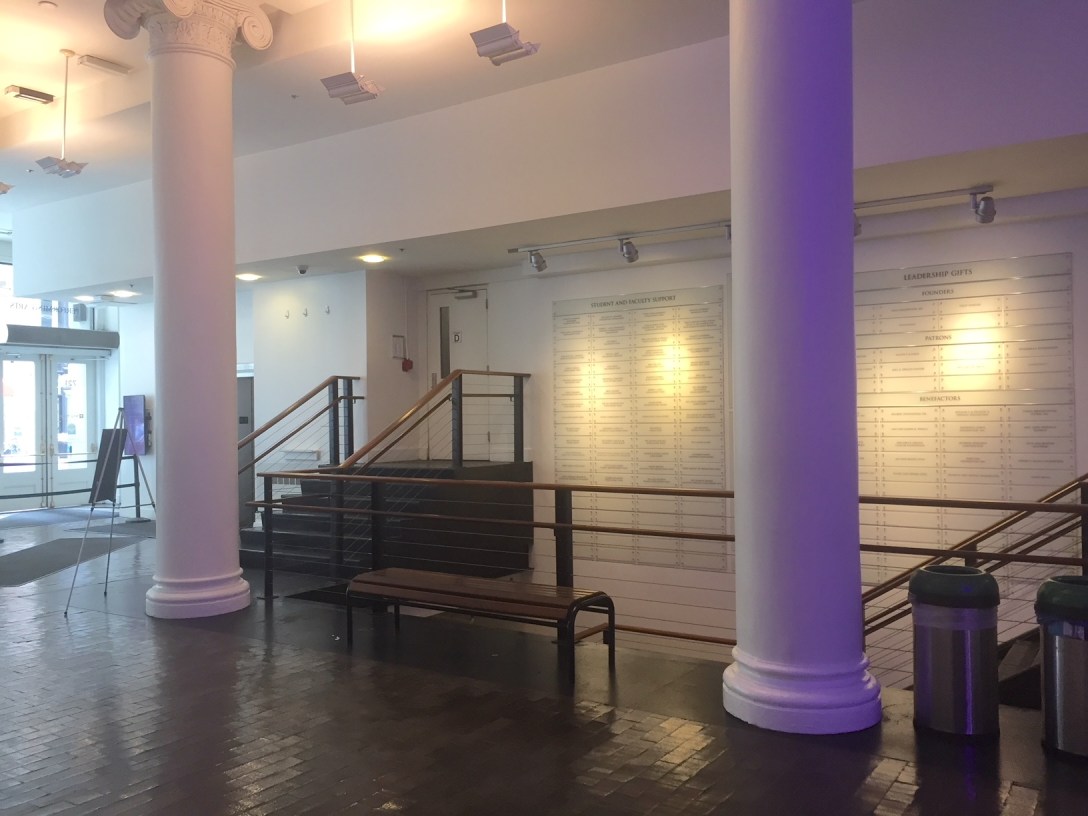
Starting Point: The Paulette Goddard Staircase in the Tisch Lobby
Team: Mary Notari, Brent Bailey, Becca Moore 

For our first assignment in Comm Lab:Audio & Video, we learned about and experimented with sound. I learned so much from my collaborators. We realized the value of brainstorming tools, like whiteboards, to help us map out our process. It helped us map the narrative arc of the piece.

Our feedback from the class was very helpful! We had been struggling with a way to make our theme less abstract – more specific. We had started with an umbrella concept of liminal space, inspired by the stairwell. We had wanted to highlight liminal architectural spaces like the stairwell, elevator, the lobby or a bench. Moments of the in between. As we re-routed to make our walk more physically accessible – we found ourselves in the lobby and attracted to architectural moments and textures. And were very inspired by Marina’s feedback to think about “what does it mean to move through a liminal space”. We had chosen a Solnit quote, compelled by her themes of inbetween-ness and how stories are often our compasses through our liminal ever shifting landscapes of cities.

To respond to what we could have done differently? If we were to do another iteration?I think really distilling a “through-line”. We may have started with thinking about liminal spaces? but could be good to keep the pulse on how the project evolves through the collaboration, sometimes that means it starts to shape in a different way thematically.

I think a post-it note wall organization strategy could help us arrange the elements we explored. I think by trying to organize it in that manner, the through-line would start to emerge. It could’ve helped to have started off the project that way too – then we using  the same post-it notes to our development arc timeline.

I would also have had us all sit down, and demo/decide a workfile system. Mary showed me a fun/ helpful way to incorporate google drive autosync for shared files, but i think my update wasn’t quite registering.

Working with Brent and Mary was super inspirational  🙂 ❤
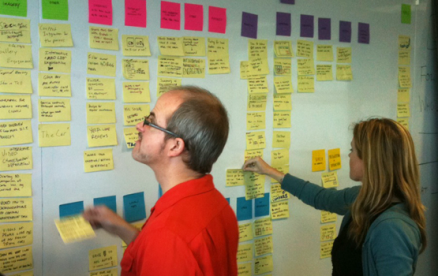
 

hwt_blog_brainstorming_2.png


Link to Next Assignment/ Storyboarding