Magic Windows: HW 1.1 & 1.2

Hw – 1.1 Augment a Space 

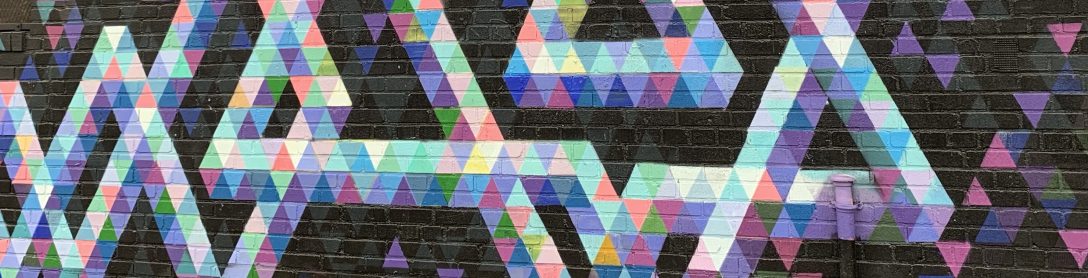
For this assignment I knew I wanted to explore and learn a little of Madmapper. I’ve always heard about it but have never gotten to try – their free demo projects their logo so please ignore the large lettering ❤ I love projection mapping that highlights details of architectural spaces. In the lines of “if these walls could talk” thought about all the sounds and music the walls around me have absorbed over the years, including a music video collection for me when younger was The work of Directors: Spike Jonze, Chris Cunningham, and Michel Gondry. 

Several videos introduced me to idea of “augmenting” or hacking our perception and reality and felt like a great building block so to speak. Although this exploration isn’t necessarily dynamic, there is no human interaction, there still feels like a special moment of altering an every day surrounding, a brick wall in our apartment here. Could imagine making it interactive where tapping one of the blocks would have a ripple effect of some kind.

Original 5 music videos inspired by the Work of Directors series I grew up watching a lot that inspired the selection below:
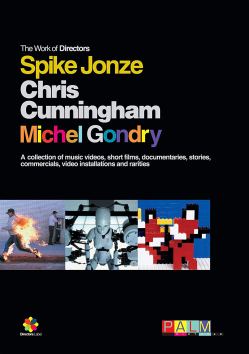
81UqwhMV8WL._SL1500_.jpg


Hw 1.2 – Give a favorite AR/XR inspiration / example 

I’ve enjoyed playing with the Wonderscope app recently. Its use of voice activation to help the user feel more connected to the characters of the story while building reading skills felt compelling. With all voice assisted technologies and speech recognition it always leaves the question of which voice is it trained for? But felt like it was definitely a playful use of animation & ar. It also provides  a great onboarding process before a story unfolds.
 

Mobile Lab: Week 1 Labs

For this week we had two labs to get us familiar with Xcode and Swift.


Xcode lab

  • learned about different sections of Main.storyboard view
    • scene graph
      • shows hierarchy of components in your views
    • canvas
      • specific views that make up the app
    • utility area
      • multiple tabs that show information about the state of the user interface and a set of tools to modify it.
      • UI widgets to drag and drop into the canvas / can size and position by value
  • Object library (cmd+shift+L) or click + sign in top menu
    • Labels
      • blue dashed lines appear when text is centered
      • playing with custom font, size, and alignment fields
  • Safe Areas / Auto Layout Constraints
    • a new concept introduced in iOS11
    • allows for responsive interaction
    • safe area is basically the guaranteed area of the screen where content will not be blocked by other elements
      • ex: designing for the iphone notch
  • Running an app simulator
  • Running an app on hardware


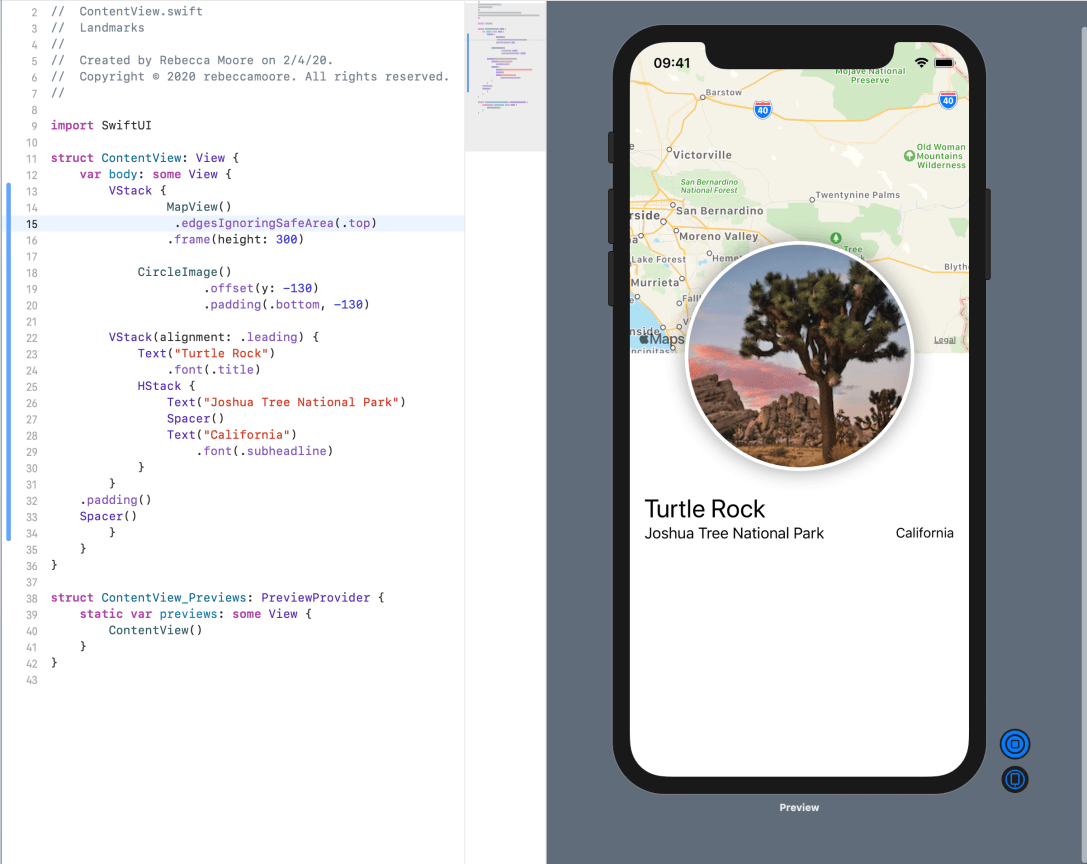
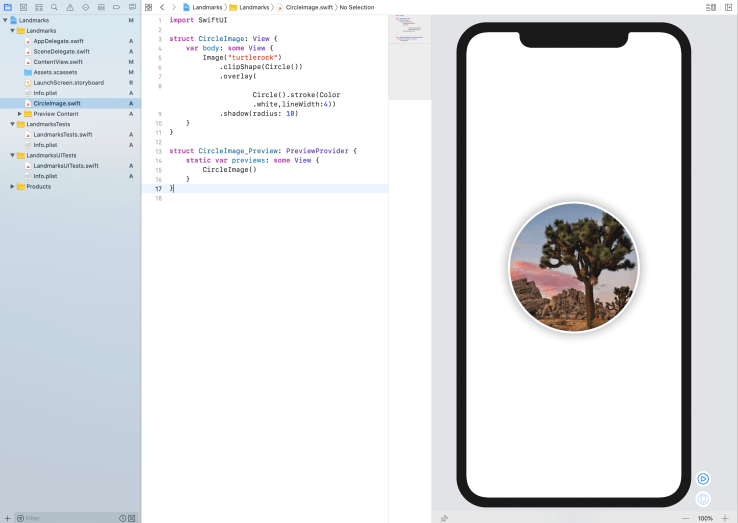
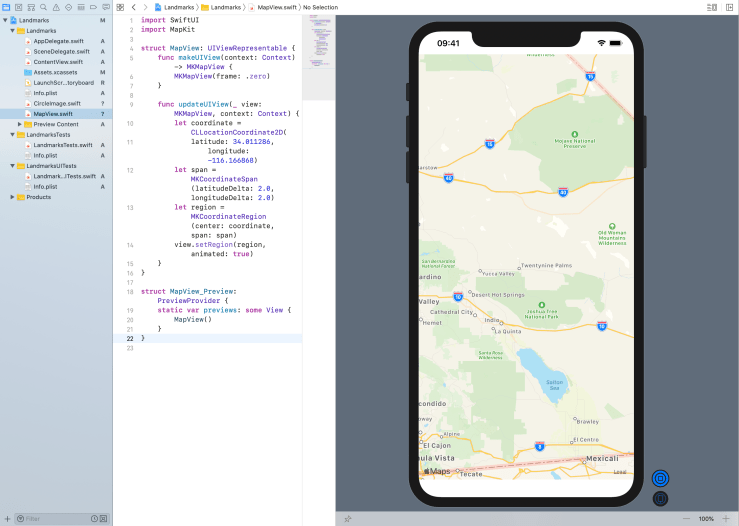
Swift UI tutorial: Creating and Combining Views 

Screen Shot 2020-02-04 at 3.11.45 PMScreen Shot 2020-02-04 at 3.20.47 PMScreen Shot 2020-02-04 at 3.36.27 PM


Pt 2 – Class 1

Review/Update/ Implementation Schedule

Give a short(5 minute) review/update to us all about your project. Has anything changed? Did you do research over the holiday that changed or augmented your thinking?

You can use this as a template for your presentation.


Break into small groups for further discussion: What will you finish by the end of the semester? What are your goals? Look at the requirements for a thesis on the Thesis Journal so you can incorporate them into your schedule. Make an implementation/production schedule (help on the Resources Section of the Thesis Journal)


Assignment 0 – post your personal , rubric, matrix


Assignment 1 – due in two weeks

Your final project is due in 2 weeks! Just kidding, sort of.  

Bring the first prototype of your project to class. Now you are out of your head–make it. If it’s screen based, make a demo sketch of  it. If it’s an object, make it (cardboard is great). Try to focus on making something that has some *testable* aspect. 


Assignment 2 – due in one week  

Send Sarah + residents your broad-strokes implementation plan. We’ll  review these together in class!

Thesis / Freewrite

EmilyFischer of Haptic Laps / https://www.hapticlab.com/

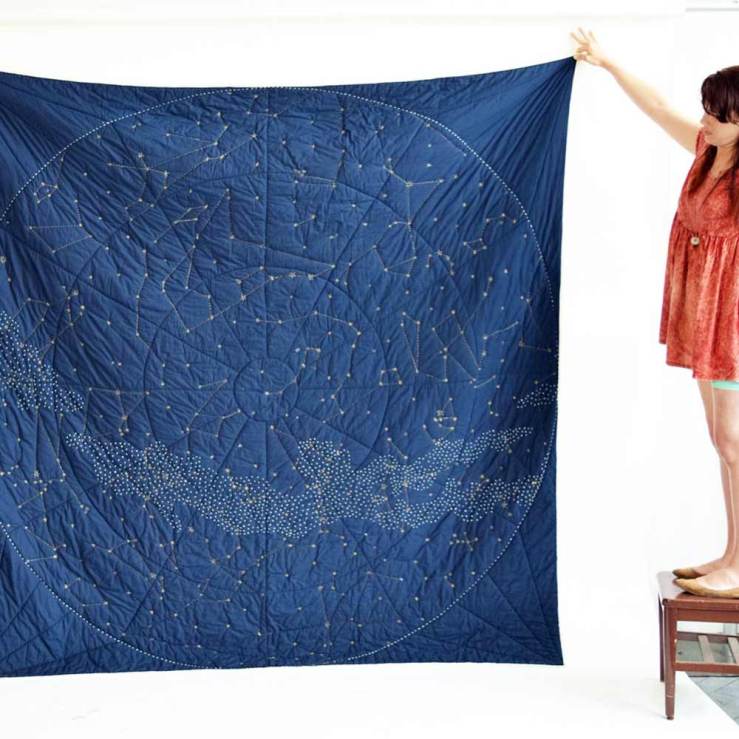
When I close my eyes, I imagine a quilt that captures a piece of the world that is wonderful. Moments that i’d like to freeze in time and be able to share, to cover my self or others in its warmth. This one would be a personal one maybe of places we’ve gone a hikes together, of climbing up cloud capp of the slices of ice bookmarking the steep slope of cooper spur.

This time when i close my eyes i imagine a small quilt that i can make for my nephews. one that incorporates elements of red blue and white from the one that my brother used as a kid, made by my mom’s grandmother speaking low german/dutch?

Almost worn down to tatters with triangles still rescuable, thinking about the maintenance essay of care by Shannon Matter. To reassemble and repair into some thing that reminds them of a park they love. Or the trees who’s leaves remind them that they live in a physical place, grounded in a location with a shared history and world of an ecosystem of a bioregion with its own unique beauty. Would use an ar software like Google Vuforia  + Unity to highlight specific moments. Thinking back to collective narrative / how might we extract the memories from objects? But more importantly is there a way for the user to add and edit their own?

Im also interested in this idea of focused attention, how we use our attention is one of the most radical acts when living in an attention economy world.

I also love projects that bridge the digital and physical world. And collecting things as a kid, and although I’m older now we are always a sum of ourselves in its many evolutions. I still love to collect, collect the little things. Little portals. I remember how callie/swoon mentioned how she felt that museum spaces didn’t feel as if they were meant for her. And I often think how maybe these pocket portals that for some are our wayfinding extensions, for some another extension of a sensory organ. (tega’s talk). Could these help us reclaim the space of a museum? To understand our own experiences or histories through an ar archive?a personal walk?

Maybe a sound quilt? Where whenAR I feel is to reclaim spaces / alternate histories, An exploration project to bring us closer / play with attention as a radical act


Was also inspired by the knitting beyond the scarf class and intro to wearables, how to make these digital experiences soft.

Neural Aesthetic: Translation Study #1: Folding Flowers


Screen Shot 2019-12-10 at 1.48.23 AM.png

giphy

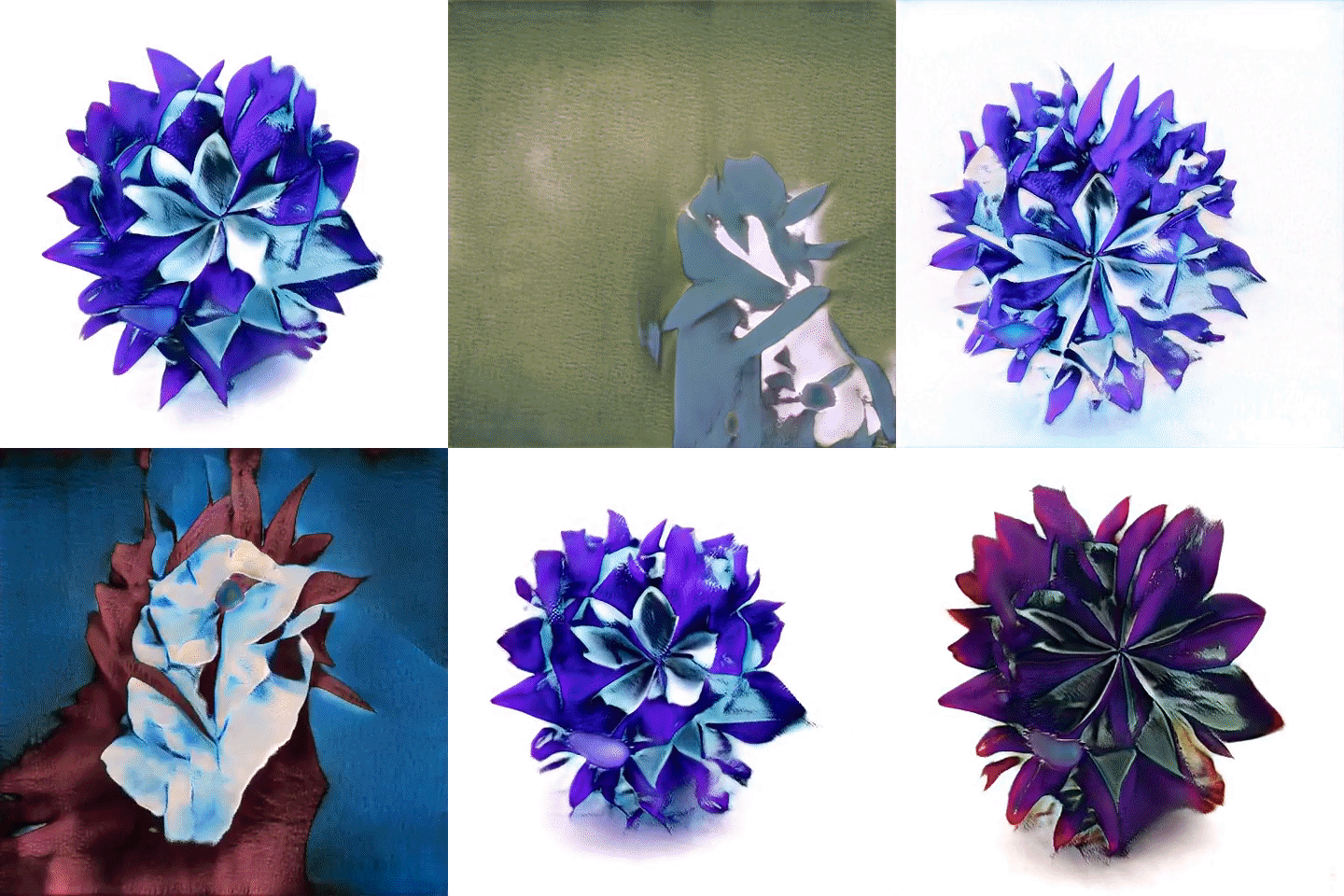
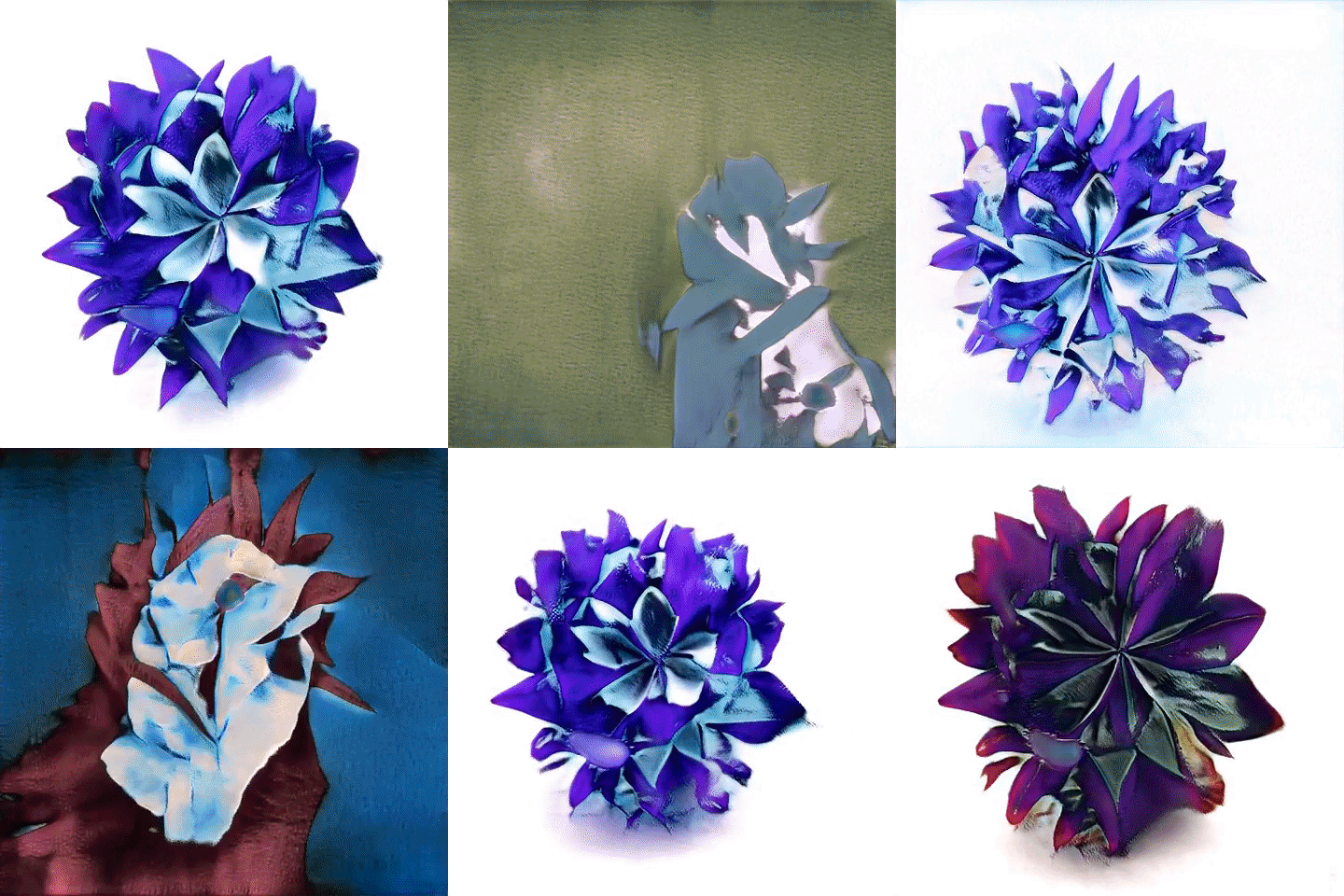
Translation Study #1: Folding Flowers was created during my time in Gene Kogan’s Neural Aesthetic class at ITP NYU. The exploration feels deeply rooted in my experience at SFPC reminding me of when Gene introduced us to machine learning and style transfer as well as being introduced to the idea of collaboration with machines.

I remember also Zach explaining the beauty and interesting things that can happen with translation. This could be a translation from one medium to another as we experienced in his class Recreating the Past or also conceptually thinking about how something in the world might be articulated through new types of media. Additionally inspired by our classmate Robby Kraft walking us through a workshop of different methods of origami and consequently tactile ways of thinking.

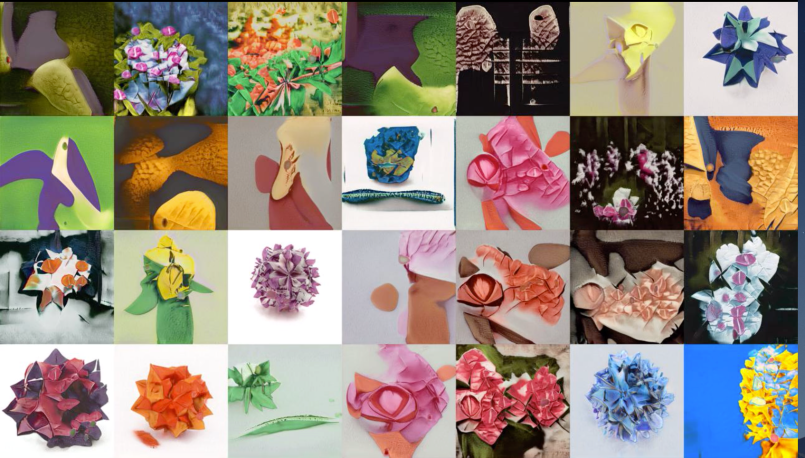
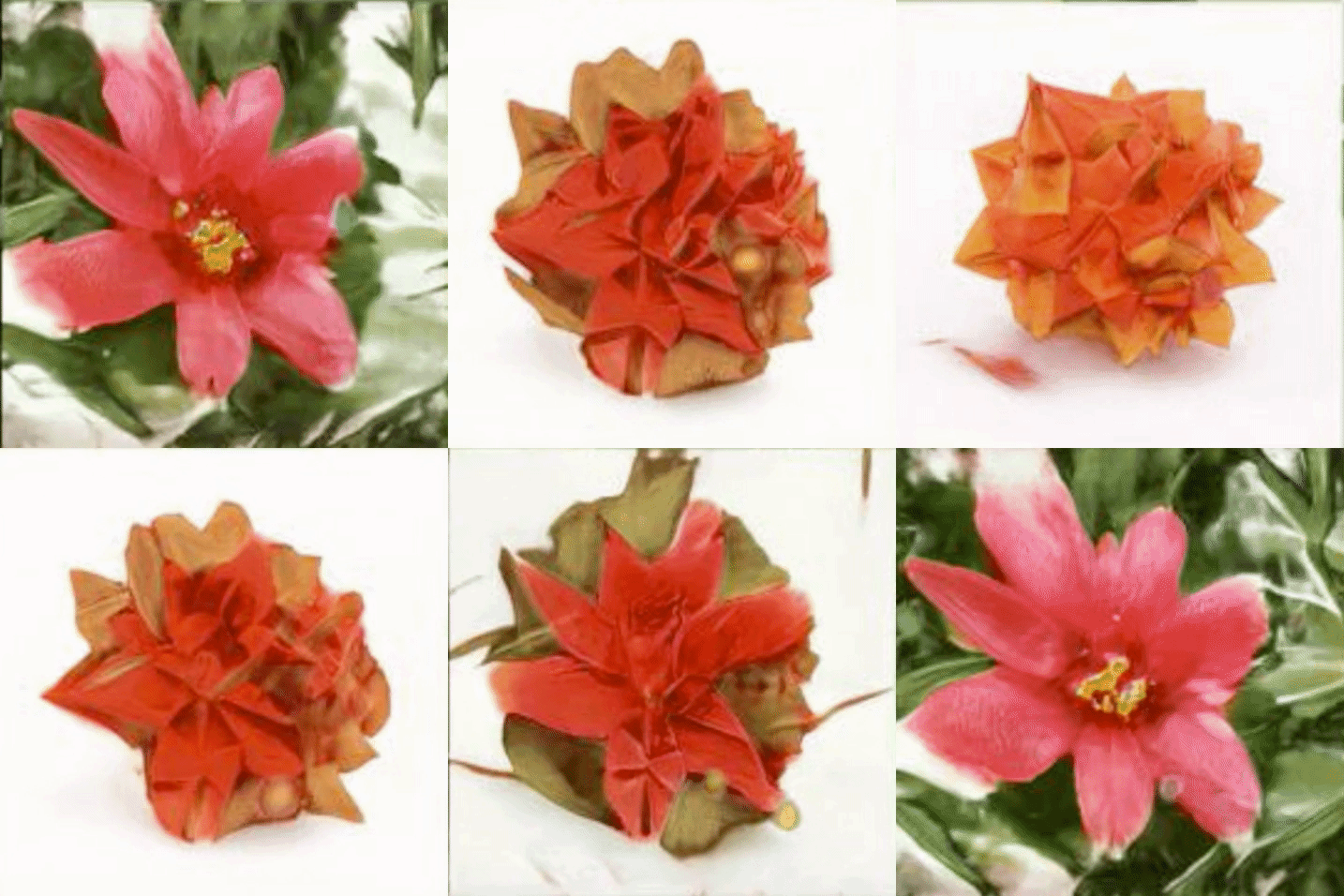
In this experiment I used RunwayML’s training to explore how computation might “fold” images of flowers into flower origami, and witness its thinking through latent space.

[Origami Image Set: Applying Sam Lavigne/ antiboredom’s flickr scaper to gather public images of Flickr group Flower Origami. Then training it on a set of flower images via RunwayML.]


01_Closeup.gif


Next test this weekend is with Swindell Pottery and her and her dad’s pottery archive & an environmental dataset like landscapes or trees. I think one helpful thing in particular has been how maybe the origami have a blank backdrop / surface that the objects are photographed against. I really like the moving between what looks like a 2d image scape and then transforming into a 3d object. It almost looks like the AI is learning how to fold and make its own origami inspired by flowers and landscapes.

If you were to use it as an actual training model maybe training it for less steps would be helpful.


Screen Shot 2019-12-04 at 5.28.48 PM.png


Joy of Games: Final Project

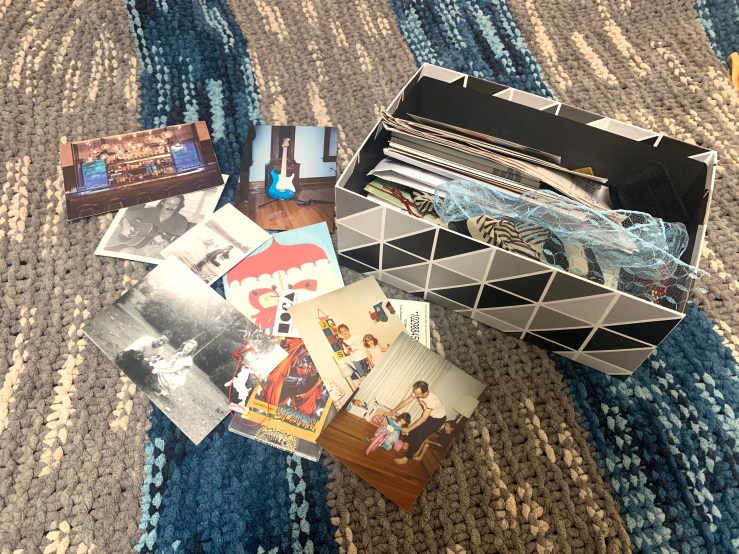
Image of box and its contents on my bed

Summary of the game/experience you are making For my final I would like to continue tuning my hw#7 sketch creating an explorative experience of storytelling through objects. I recently used an artec spider through NYU Tandon and think it could be fun to scan objects in / clean them up for a more realistic feel?

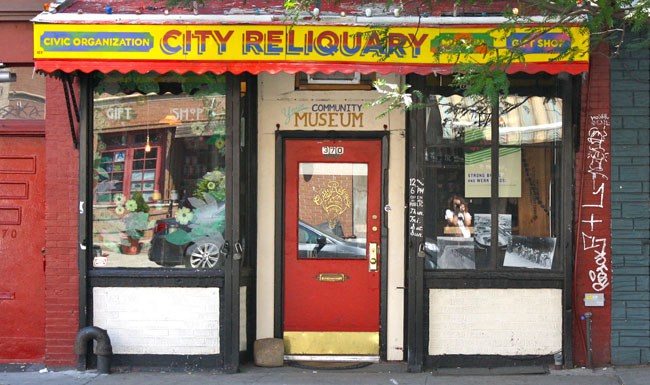
cityreliquary


An explanation of how this links up to the concept of games (or playful experiences) and your intended flavor of joy: 

How does this connect to my intended flavor of joy? As first explored in the start of the semester through our manifesto activity. Creating something slow and meditative is at the core of what I was thinking in Skipping the Speedrun to watch the Clouds. Something that simulates the enjoyable experience of a closer look. How can environmental storytelling create a stronger narrative? Thinking of film production what does mise-en-scene or the art direction of set and props help lay the foundation for

Thinking about what are the things we collect? and what are the stories they tell. What are the objects we leave behind and the stories they tell? This box is a personal one but how interesting is it for the viewed to navigate through it? Often we talk about how history is not linear but constellation of impactful moments all informing one another. Exploring a personal history as a nonlinear playful experience makes sense to me.

  • Some Questions: 
    • What would make it more engaging for the viewer? How could it be juicy-er?
    • could work on interacting with the objects / do they trigger another sensory experience when clicked? like audio samples connected to the objects?
    • Work on the physical control of mouse drag & WASD keys for rotation.
    • Reminded of the book Worn Stories by Emily Spivack. Could be fun to have a game where we have an “itp closet” where you can pull out scanned objects of clothing that people have recorded a narrative story attached to it?
    • The question that was raised in our collective narrative class when we visited the City Reliquary. Can it be a museum if an object has no markers? How much context does the viewer need?
    • What does it mean to for it to be personal archive? Would feel less intrusive if it was a box of personal objects that belonged to a celebrity? What about a stranger or someone of a generation past? Does it feel too voyeuristic or intrusive?


A general breakdown of the big milestones you plan to accomplish each week.

Class 12: Initial Final Presentations / Final Week1

  • Storytelling through objects, nonlinear exploration a closer look
  • Sketch out interactions I’d like to achieve
    • would clicking on certain objects create atmospheric switches?
  • book time with the 3d ARCtec
  • Decide which objects
  • Figure out desired object orientation / needed code support
  • get permission from friends or family to include their objects
  • Look into how to make a more stable box top


Class 13: Testable Prototype 

  • fold in user testing feed back
  • create another mini zine with object drawings / narrative snippets?


Class 14: Final Presentations 


An initial prototype of your core mechanic (this week, your prototype can be digital or paper) 

Will focus in on Boolean logic of mouse clicked or mouse drag ❤

In class some great thinking point were mentioned:

  • How to signal that they aren’t random objects but rather belong to a specific person (me in this moment).
  • is there audio to go with the items? / what flavor of nostalgia?
  • how would it be displayed?
    • creating an invitation into the magic circle by creating an environment around the display
    • Maybe a blanket fort? Will need to brainstorm how that could work structurally in the space 440px-Blankt_fort.jpg