Give a short(5 minute) review/update to us all about your project. Has anything changed? Did you do research over the holiday that changed or augmented your thinking?
Break into small groups for further discussion: What will you finish by the end of the semester? What are your goals? Look at the requirements for a thesis on the Thesis Journal so you can incorporate them into your schedule. Make an implementation/production schedule (help on the Resources Section of the Thesis Journal)
Assignment 0 – post your personal , rubric, matrix
Assignment 1 – due in two weeks
Your final project is due in 2 weeks! Just kidding, sort of.
Bring the first prototype of your project to class. Now you are out of your head–make it. If it’s screen based, make a demo sketch of it. If it’s an object, make it (cardboard is great). Try to focus on making something that has some *testable* aspect.
Assignment 2 – due in one week
Send Sarah + residents your broad-strokes implementation plan. We’ll review these together in class!
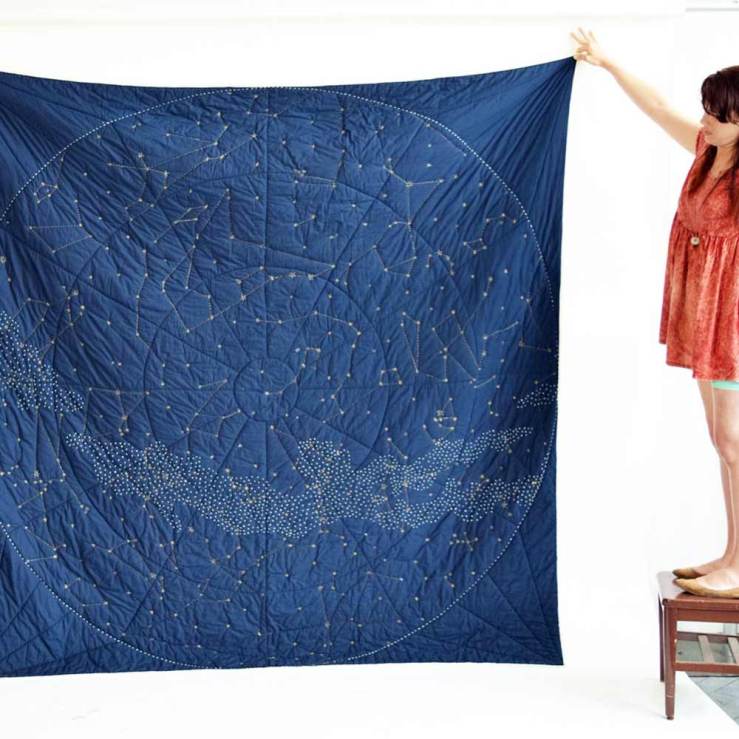
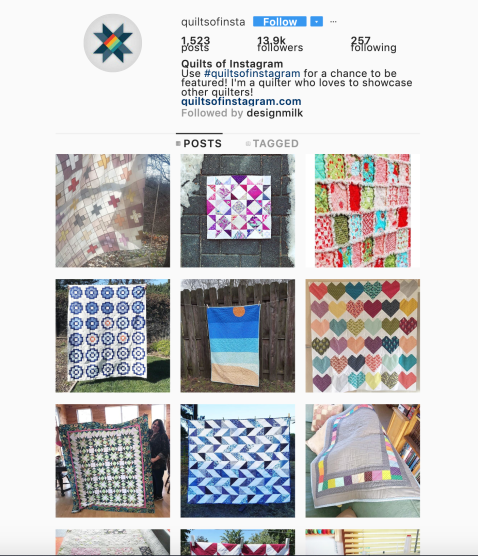
When I close my eyes, I imagine a quilt that captures a piece of the world that is wonderful. Moments that i’d like to freeze in time and be able to share, to cover my self or others in its warmth. This one would be a personal one maybe of places we’ve gone a hikes together, of climbing up cloud capp of the slices of ice bookmarking the steep slope of cooper spur.
This time when i close my eyes i imagine a small quilt that i can make for my nephews. one that incorporates elements of red blue and white from the one that my brother used as a kid, made by my mom’s grandmother speaking low german/dutch?
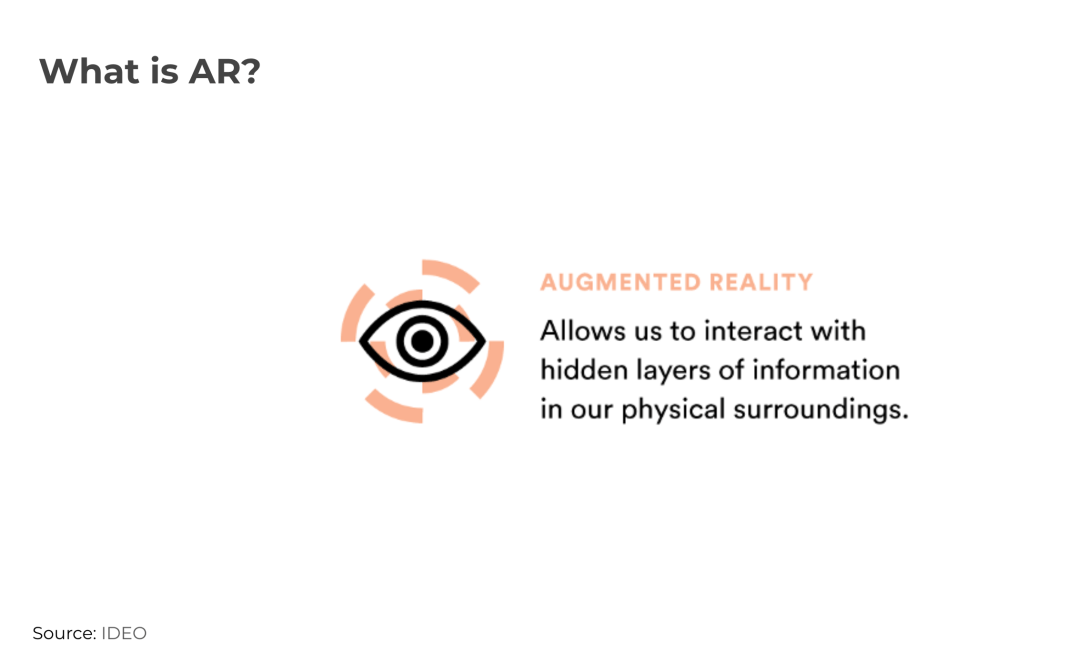
Almost worn down to tatters with triangles still rescuable, thinking about the maintenance essay of care by Shannon Matter. To reassemble and repair into some thing that reminds them of a park they love. Or the trees who’s leaves remind them that they live in a physical place, grounded in a location with a shared history and world of an ecosystem of a bioregion with its own unique beauty. Would use an ar software like Google Vuforia + Unity to highlight specific moments. Thinking back to collective narrative / how might we extract the memories from objects? But more importantly is there a way for the user to add and edit their own?
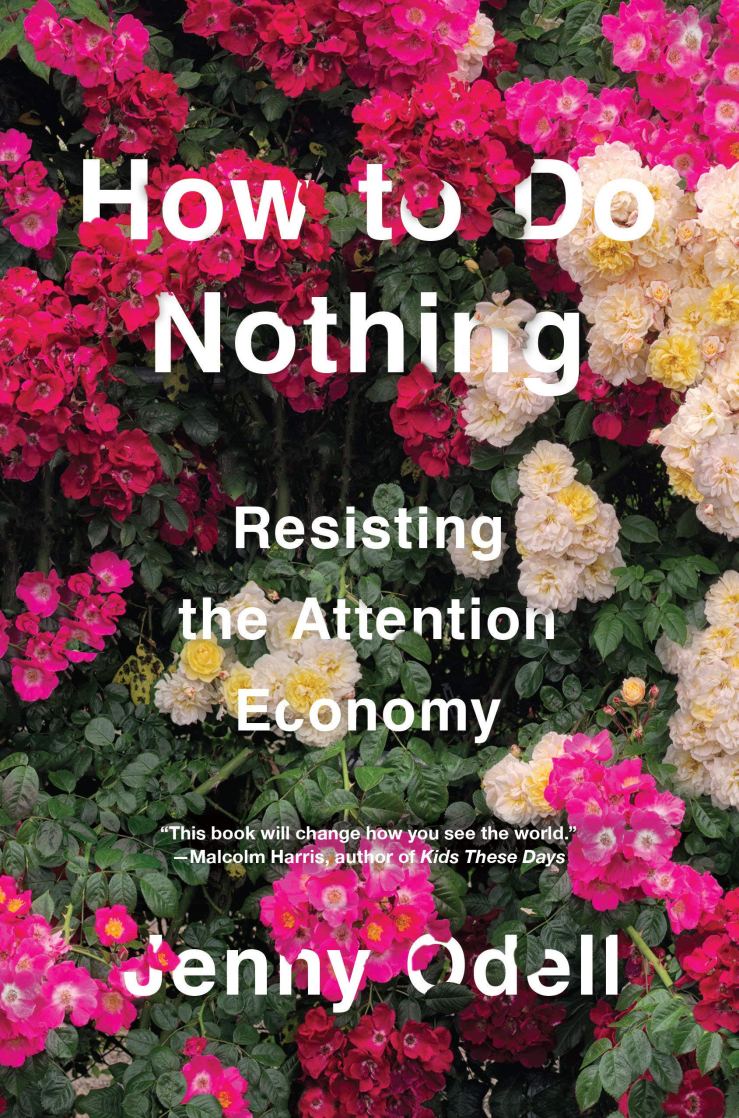
Im also interested in this idea of focused attention, how we use our attention is one of the most radical acts when living in an attention economy world.
I also love projects that bridge the digital and physical world. And collecting things as a kid, and although I’m older now we are always a sum of ourselves in its many evolutions. I still love to collect, collect the little things. Little portals. I remember how callie/swoon mentioned how she felt that museum spaces didn’t feel as if they were meant for her. And I often think how maybe these pocket portals that for some are our wayfinding extensions, for some another extension of a sensory organ. (tega’s talk). Could these help us reclaim the space of a museum? To understand our own experiences or histories through an ar archive?a personal walk?
Maybe a sound quilt? Where whenAR I feel is to reclaim spaces / alternate histories, An exploration project to bring us closer / play with attention as a radical act
Was also inspired by the knitting beyond the scarf class and intro to wearables, how to make these digital experiences soft.
“The ecological crisis we face is so obvious that it becomes easy — for some, strangely or frighteningly easy — to join the dots and see that everything is interconnected. This is the ecological thought. And the more we consider it, the more our world opens up.”
What would an ecololgical society look like? What would an ecological mind think? What kind of art would an ecologically minded person enjoy? All these questions have one thing in common: the ecological thought.
Could think of it as a prequel to his previous book, ecology without nature
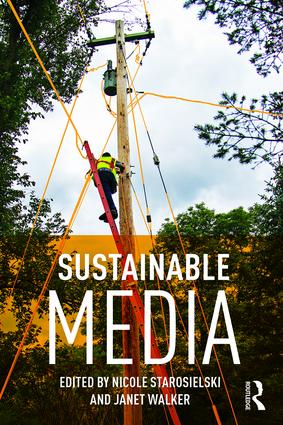
“Things, within the Internet of Things, are the curious creatures to which I turn my attention in this chapter…
What are these things in the Internet of Things and what are the characteristics of their emerging materialities?
How, as newly electronicized objects, do they manifest distinct material and environmental effects?
And how might an attention to these material and environmental effects provide an opportunity for generating new areas of environmental intervention in relation to sustainable media?”
“Alongside theorists like Lisa Parks and Matthew Fuller, I have argued for a consideration of what lies beyond the screen, of how hardware unfolds into wider ecologies of media devices, and of how electronic waste may evidence the complex ways in which media are material and environmental, despite our tendency to overlook these interconnected infrastructures, supports, and resources.”
“What are these things within the Internet of Things and how do they influence, challenge, disrupt, or reroute discussions of materiality within media studies? What consequences do these things have for thinking about the environmental effects and relations generated through the Internet of Things?”
“ubiquitous computing = central to new environmental practices
ex: monitoring pollution / citizen science
sensor technologies are also entangled with proposals for new efficiencies to be gained, as well as new opportunities to achieve sustainability through ongoing monitoring of resource use. Yet on the other hand and as will be my focus here, the projected rise in computational objects and applications is sure to generate new modalities and distributions of electronic waste
How do these specific applications and imaginaries of the Internet of Things inform the materialities—and things—that are generated?
And what implications do these materialities and things have for media theory and practice?”
“The Waste from Electrical and Electronic Equipment (WEEE) directive of the European Commission documents a bewildering array of items—from laptops to toasters—for treatment as a special category of this hazardous waste.”Digital Rubbish: A Natural History of Electronics // Jennifer Gabrys ”
“the things within the Internet of Things consist of a growing list of intelligent devices that would augment, optimize, and interconnect every aspect of our daily lives. To what extent might this expanding array of digital things generate different modalities, materialities, and environments of computation?”
“The Internet of Things is just as often referred to as the Internet of Everything, since networked and programmed capabilities are meant to inform products, bodies, environments, and systems, where the world is connected through sensors, networks, and a steady flow of data.”
“The number of devices connected to the Internet is currently estimated to be approximately one and a half to two billion. By 2020, however, this number is forecast to grow to up to fifty billion devices, with many more set to follow.8”
“the Internet of Things as a concept is often dated to Mark Weiser’s work on ubiquitous computing at Xerox Parc in the 1980s and 1990s,9 and as an actual term is dated to 1999,10 another pivotal moment in the concept’s elaboration is 2008, the year when Internet-based machine-to-machine connectivity surpassed that of human-to-human connectivity.1”
Connected toaster exaple:
“Cerf opines, but he draws a further connection to how such a “feedback loop is going to be important from an environmental point of view, because I would say that we don’t always understand the consequences of our actions.” He concludes, “this kind of feedback loop may actually help us do a better job of managing our response to environmental problems including global warming.”
Thingification as Enabling and Ennobling Technology
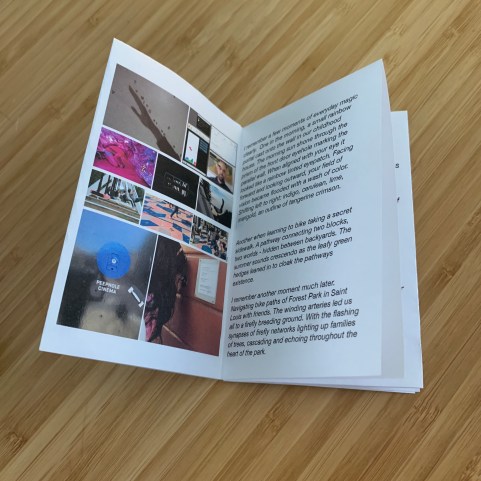
I remember a few moments of everyday magic clearly. One in the morning, a small rainbow portal cast onto the wall in our childhood house. The morning sun shone through the prism of the front door eyehole marking the parallel wall. When aligned with your eye it looked like a rainbow tinted eyepatch. Facing forward and looking outward, your field of vision became flooded with a wash of color. Shifting left to right: indigo, cerulean, lime, marigold, an outline of tangerine crimson.
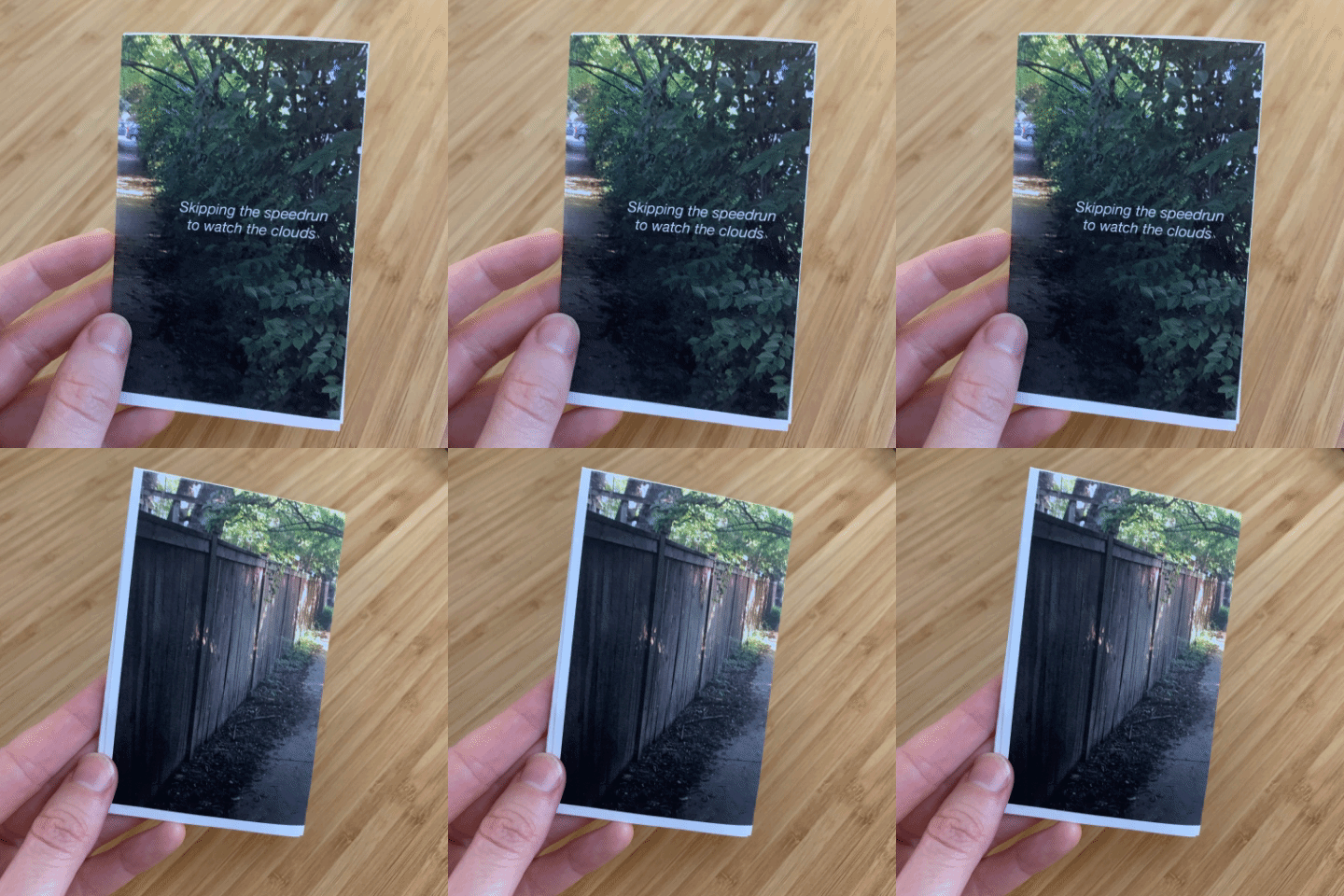
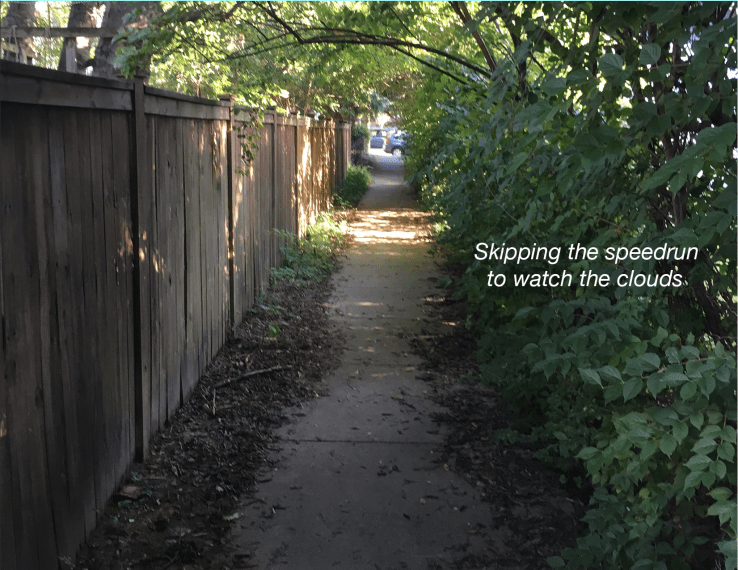
Another when learning to bike taking a secret sidewalk. A pathway connecting two blocks, two worlds – hidden between backyards. The summer sounds crescendo as the leafy green hedges leaned in to cloak the pathways existence.
I remember another moment much later. Navigating bike paths of Forest Park in Saint Louis with friends. The winding arteries led us all to a firefly breeding ground. With the flashing synapses of firefly networks lighting up families of trees, cascading and echoing throughout the heart of the park.
A question for makers of any age – What does it mean to root something in the slightly familiar, our own everyday slightly suspended? A heightened sensitivity to ambient elements reminding us how all things are delicately interconnected. What happens if I tap the particles of dust sprinkled through a window’s sunbeam? Combing through it like a hand out a car window, triggering notes of a chromatic scale. What does it mean to construct, make, illustrate moments of almost not quite magic realism?
In a post about slow games TB writes “Gamers, slow down. Resist rushing to the finish line. Immerse yourself in the beauty of the art and gaming experience.”* Although the blog post was implying the rapid turnover of games in the industry as well as the constant backlog of games people would like to play – Inspired by this I say also to myself and all makers slow down. Slow food, slow net, slow tech, all the slows but slow down how? I’d like to skip the speedruns and instead engage in watching clouds to get lost in their shapes, what they tell us about weather and culture past, present and future and what images and stories emerge. Maybe it leads to introspection maybe it calls for collaboration or both, But slowness how?
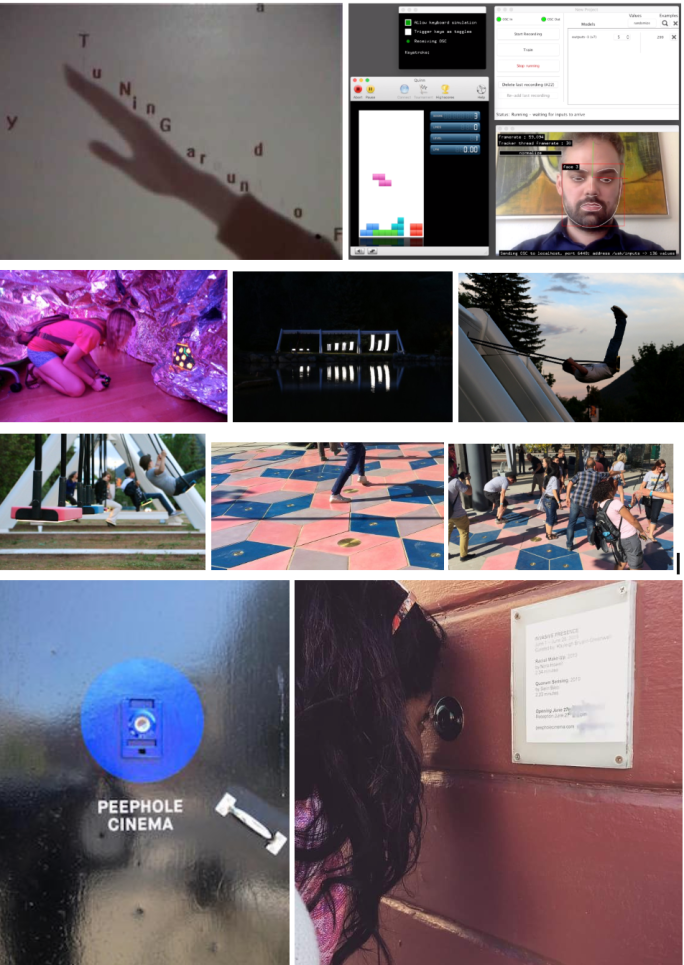
Maybe it’s a slowness through non-linear narratives, unfolding through an open world exploration. In digital worlds but also the physical. One of my first memories of living in New York City was tracking down the peephole cinema, and searching for where it lived along the Union Docs wall. Maybe rather it’s the slowness of a prolonged consideration when a game controller is not just a mouse or standard game console controller but instead my body in space catching words as they complete sentences along my arm outstretched. Or the slowness of realizing and practice of moving my mouth sidewise will in fact rotate my tetris piece clockwise. The slowness of trying to align the speed of my swing at the right rate with my neighbors’ swings to arpeggiate a chord.
It could be the physical slowness of crawling into an ephemeral physical space that houses the game itself. Please, crawl into this silver space blanket cave to play Pac Man in 360. Bridging between physical & digital worlds – a transition into the magic circle.
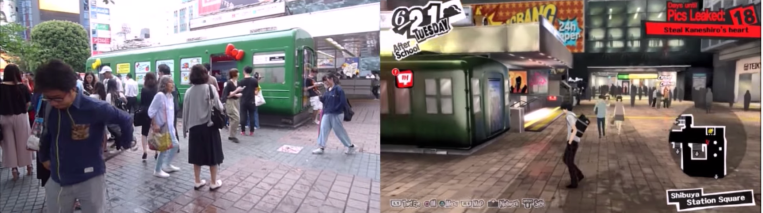
Maybe rather it’s the slowness that happens after. A slow revelation – When a player realizes that they can explore the real subway of Shibuya in Tokyo for the first time and have it feel like a home, due to their memories of Persona 5 gameplay with its map rooted in reality. What unexpected joy is yielded for cavers passing through the Mammoth Cave networks to realize they were navigating similar channels as their text commands in the Colossal Cave Adventure. Is there a subtle beauty to ground fiction in reality?
References / Inspirations
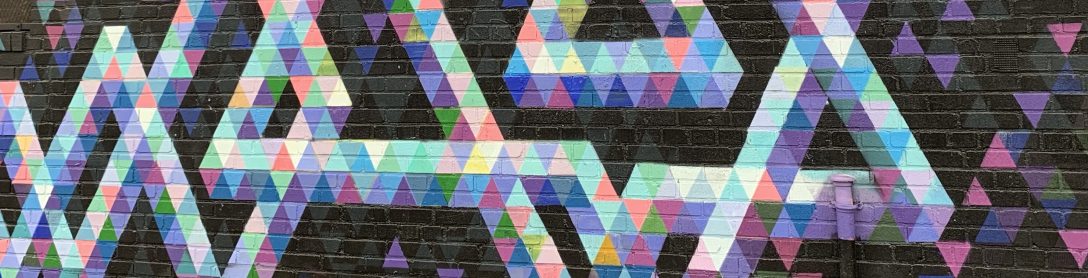
Cover / back image: by Hunter Moore of secret sidewalk



 30 KM/s