For our assignment in Knitting Beyond the Scarf we were to create a knitting pattern that embeds information, thinking about the question of how knitted items might hold details to be decoded.
Our teacher Janusz Jaworski showed us some great examples. One included a favorite poem written in morse code. We also talked as a class how it could be fun to write music into our patterns. That sounded great to me, and decided to try it with a section of Santo & Johnny’s Sleepwalk track. Inspired by things like Brian House‘s Quotidian Record and older music technologies like the Mira 181/2 inch concert box from the late 1800s.
1. The message/ information/ structure to be encoded, and the means of encoding
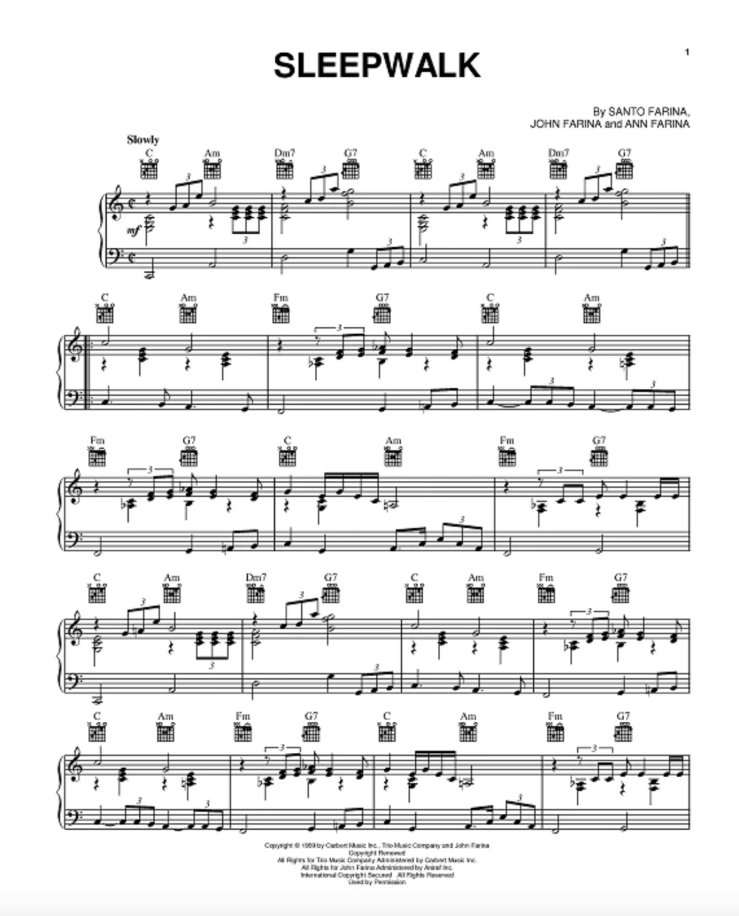
For this pattern I translated a midi input of a section of sleepwalk (15sec – 45 sec ) over four octaves. Could see elaborating on it to read more accurately? Right now it has the notes embedded in the pattern, but the duration for how long each note should be played is not completely accounted for. I chose to take out a flourish that was in the youtube link at 32 sec. Could see in future iteration signaling the time signature and that each square could represent a quarter note.
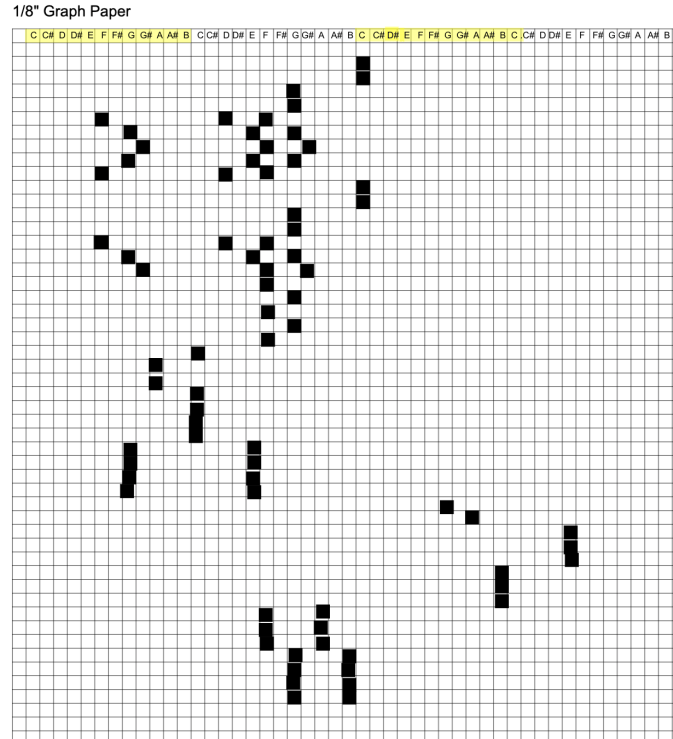
2. The knitting pattern for the encoding – the pattern only, NOT the knitted piece
Sleep Walk Pattern
- Pattern is to be knitted flat
- 48 stitches
- A 49 row repeat
- row 1 is to not be repeated (establishes the 4 octaves through purling &
- knitting in very beginning)
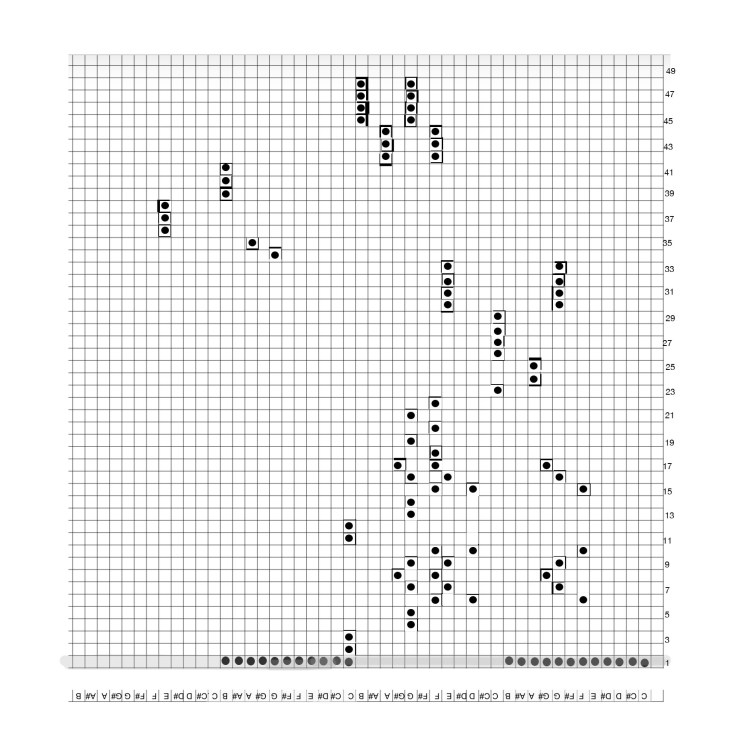
an image of Sleepwalk Pattern repeated:
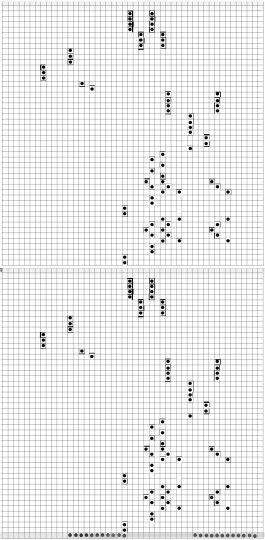
3. A description of how the knitted piece might hypothetically be decoded
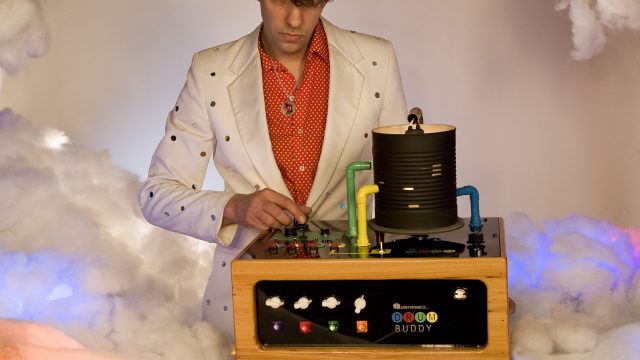
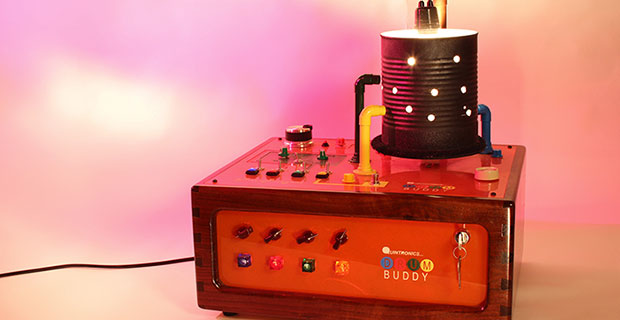
Something in the realm of NIME class / an instrument like musician Quintron’s Drum Buddy. Where sensors could read the knitted notes in sequence.
Or maybe more like music box notation
But more realistically, as an experimental score for a musician. The first row of the pattern helps dictate how many octaves, but up to the musician how high or low register they would like those octaves to cover.
 30 KM/s